

Every small business starts somewhere, and most start small — a first round of funding measured in thousands, not hundreds of thousands. For founders who need starter capital, two options dominate the conversation: microloans, purpose-built for tiny businesses and new entrepreneurs, and business credit cards, the flexible revolving tool already sitting in millions of wallets. The microloan vs business credit card decision shapes how a young business borrows, what it pays, and whether it builds the credit history it will need later.
A microloan is a small, structured installment loan — borrow a fixed amount, repay it in regular installments, done. A business credit card is revolving credit — borrow, repay, borrow again, with payments that flex around a minimum due. One rewards discipline with low costs and a finish line; the other rewards it with flexibility and punishes its absence with some of the most expensive debt in business finance.
This guide compares the two head to head: how each works, what each really costs, who each suits, and the traps first-time borrowers fall into. If you are choosing your business’s first funding, this is the comparison to get right.
Key Takeaways
- Microloans offer small, fixed installment loans with structured repayment — ideal for defined startup costs and borrowers building credit from scratch.
- Business credit cards offer revolving flexibility: borrow and repay repeatedly, with minimum payments that keep cash flow easy but balances expensive.
- Microloans usually cost less in total interest and come with mentoring and support; cards cost more when balances revolve but offer rewards, float, and instant access.
- Microloan approval focuses on your business plan and character; card approval focuses on credit scores — thin files struggle with cards but can thrive with microloans.
- Many young businesses end up using both: a microloan for the planned investment and a card for ongoing expenses paid in full each month.

How Microloans Work
A microloan is exactly what the name suggests: a small business loan, typically ranging from a few hundred to tens of thousands of dollars, issued as a fixed installment loan. You receive a lump sum, repay it in regular installments over a set term, and the debt ends on schedule. In the US, the best-known microloan programs are run by nonprofit lenders and backed by the Small Business Administration (SBA); similar community-lending and government-backed small-loan programs exist in the UK, Canada, and Australia.
The Structure
Microloans work like miniature term loans, with a few distinctive features:
- Small amounts by design. Microloans target the funding gap too small for most banks — the few thousand dollars a food cart, home-based business, or freelance operation actually needs.
- Fixed installments and defined terms. Payments are predictable and the payoff date is known, which simplifies budgeting for first-time borrowers.
- Mission-driven lenders. Many microlenders are nonprofits or community organizations whose goal includes borrower success — visible in the underwriting and the support.
- Support beyond money. Microloan programs frequently bundle mentoring, business training, and technical assistance — valuable for first-time founders.
What Microlenders Evaluate
Microlenders underwrite differently from banks. With small amounts at stake and a mission orientation, they look at the whole founder:
- The business plan. A coherent plan for the money — what it buys, how it generates returns — matters more than a long track record.
- Character and commitment. Many microlenders interview borrowers and weigh personal commitment, industry knowledge, and realistic planning.
- Cash flow plausibility. Can the business plausibly service the installments? The bar is realistic rather than punishing.
- Credit history — but with context. Weak credit is not an automatic rejection the way it often is with banks; microlenders frequently work with borrowers building or rebuilding credit.
Approval takes days to weeks — longer than a card application, far less than a bank loan. For broader lender-channel context, see our online vs traditional business lenders comparison.
How Business Credit Cards Work
A business credit card extends revolving credit to the business: a credit limit you can draw against, repay, and draw against again. Each billing cycle you may pay the full balance (paying no interest on purchases, in most cases) or pay a minimum and revolve the remainder — with interest accruing on the unpaid balance. It is the most flexible funding tool most small businesses will ever hold, and the most dangerous when misused.
The Structure
- Revolving, not installment. No fixed payoff date — the line stays open while the account is in good standing. You control the repayment pace, within the minimum-payment floor.
- Grace periods on purchases. Pay the statement balance in full each month and purchases typically accrue no interest — a free short-term float of up to several weeks.
- Limits tied to creditworthiness. Starting limits for new businesses are often modest, growing with payment history and revenue.
- Rewards and perks. Cash back, points, and expense tools are genuine value — but only when balances are paid in full. Rewards never offset revolving interest.
What Card Issuers Evaluate
Card underwriting is fast and score-driven: the personal credit score dominates, especially for new businesses (most small-business cards require a personal guarantee), while income, existing debt, and business revenue shape the limit. Approval can be instant for strong applicants — the fastest funding in this comparison. But thin or damaged personal credit means rejection or tiny limits. Our business credit card vs business loan guide explores how cards compare with larger structured borrowing.
Microloan vs Business Credit Card: Side-by-Side Comparison
- Structure. Microloan: fixed installment loan with a defined payoff date. Card: revolving credit with no end date — borrow, repay, repeat.
- Amounts. Microloan: small lump sums sized for starter needs. Card: a limit you draw as needed; effective “amount” depends on utilization discipline.
- Cost when used well. Microloan: modest total interest over a fixed term. Card: near-zero when paid in full monthly — the cheapest funding available.
- Cost when used poorly. Microloan: the cost is fixed regardless. Card: revolving balances accrue high interest with no finish line; minimum payments stretch debt for years.
- Payment flexibility. Microloan: fixed installments, due regardless. Card: pay in full, pay the minimum, or anything between — maximum flexibility, maximum temptation.
- Qualification. Microloan: business plan, character, plausible cash flow; weak credit often workable. Card: score-driven; thin or damaged files struggle.
- Credit building. Microloan: reported installment history. Card: utilization and payment history reported — powerful when managed well, damaging when maxed out.
- Extras. Microloan: mentoring, training, and lender relationships. Card: rewards, purchase protections, expense tools, and float.
- Best for. Microloan: defined startup investments, first-time borrowers, founders building credit. Card: ongoing operating expenses, disciplined borrowers who pay in full, businesses that value rewards and float.
The pattern is clear: microloans are the structured, supportive starter path; cards are the flexible tool that rewards discipline and punishes its absence. Neither is “the” answer — the answer depends on the use of funds and the borrower’s habits.
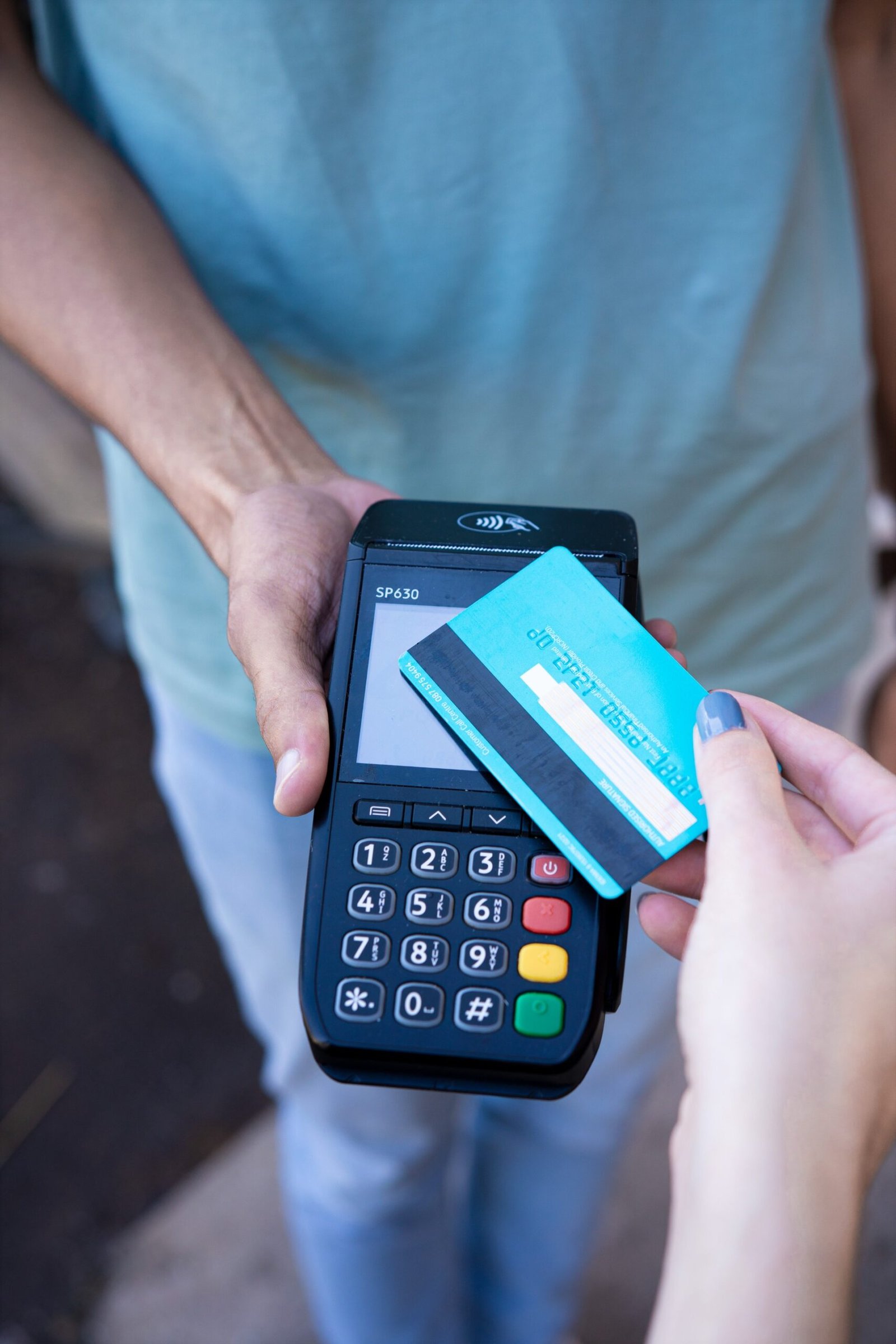
Comparing Costs: Interest, Fees, and the Minimum-Payment Trap
Cost comparison here has a twist: the microloan’s cost is knowable in advance, while the card’s cost depends entirely on behavior. A card paid in full every month costs less than any loan on earth; the same card with a revolving balance becomes one of the most expensive funding sources available.
A Hypothetical Illustration
Consider a business needing $8,000 for startup equipment (all figures hypothetical, for illustration only):
- Microloan path: $8,000 installment loan, fixed monthly payments over 3 years. Total repayment is a single knowable number with a defined end date.
- Card path, paid in full: $8,000 charged and repaid within the grace period. Interest cost: effectively zero — nothing beats it, if the discipline holds.
- Card path, minimum payments: $8,000 revolved with minimum payments at a typical card rate. The balance lingers for years, total interest multiplies, and the “cheap” card becomes far more expensive than the microloan.
The lesson: the card’s cost is a behavioral variable; the microloan’s is a contractual constant. Borrowers who honestly assess their payment discipline can predict which path is cheaper. Those who overestimate it — the most common error in this comparison — pay for the optimism in interest.
Fees on Both Sides
- Microloans may carry modest origination or application fees; the mission-driven structure generally keeps fee loads light. Always ask for the all-in total repayment figure.
- Cards may charge annual fees (often waived the first year), plus late-payment, over-limit, and cash-advance fees with immediate interest. Cash advances deserve special caution: no grace period, upfront fees, and high rates make them among the costliest ways to access cash.
The Minimum-Payment Trap
The minimum payment — often just a small percentage of the balance — is the card industry’s most profitable feature and the borrower’s most dangerous. Paying only the minimum means most of each payment goes to interest, the principal barely shrinks, and the debt outlives the asset it purchased. Microloans have no equivalent trap: every installment reduces principal on schedule. If balances might revolve, the microloan’s forced amortization is not a constraint — it is protection.
The Pros and Cons of Each Option
Microloans
Advantages:
- Structured and predictable — fixed installments, known total cost, defined payoff date.
- Accessible to thin-file borrowers — plan and character count alongside credit history.
- Lower cost than revolving balances — modest total interest, no minimum-payment trap.
- Mentoring and support bundled with many programs.
- Builds credit history through reported installment payments.
Disadvantages:
- Small amounts only — insufficient for larger investments (see our equipment loan vs equipment lease comparison for bigger asset purchases).
- Slower funding — days to weeks, not instant.
- Fixed payments offer no flexibility in slow months.
- Use restrictions — some programs limit what funds can finance.
- Limited availability — program coverage varies by region.
Business Credit Cards
Advantages:
- Unmatched flexibility — draw, repay, and redraw as needs change.
- Near-zero cost when paid in full — the grace period makes disciplined use the cheapest funding available.
- Instant access — the fastest funding in this comparison.
- Rewards, float, and expense tools add real value for disciplined users.
- Builds credit fast — reported utilization and payment history move scores quickly.
Disadvantages:
- High cost on revolved balances — among the most expensive business debt when minimums become the habit.
- No forced payoff — balances can linger indefinitely.
- Temptation risk — available credit invites spending beyond the plan.
- Score-dependent — thin or damaged personal credit means rejection or tiny limits.
- Personal guarantee typical — the founder’s personal credit is on the line.
Which Fits Your Business?
A Microloan Usually Fits When…
- The need is a defined, one-time investment. Startup equipment, initial inventory, a vehicle, or leasehold improvements — a fixed amount for a fixed purpose matches installments perfectly.
- You are borrowing for the first time. The structure, mentoring, and forced discipline of a microloan program suit founders without borrowing experience.
- Your personal credit is thin or imperfect. Microlenders evaluate the whole picture; card issuers mostly evaluate the score.
- You want a finish line — the psychological and financial clarity of a payoff date.
- The amount exceeds comfortable card discipline. If the sum is large enough that revolving it would tempt you, the microloan’s structure protects you from yourself.
A Business Credit Card Usually Fits When…
- Spending is ongoing and variable. Supplies, travel, advertising, subscriptions — recurring operational expenses fit revolving credit naturally.
- You pay balances in full every month. The non-negotiable condition: if it holds, the card is the cheapest option; if not, the most expensive.
- Cash-flow timing needs smoothing. The grace period bridges spending and receivables without interest — a legitimate, valuable use.
- You want rewards and expense management that turn necessary spending into points and analytics.
- Speed matters. Same-week funding needs favor instant card approval.
When Neither Fits
If the need is larger than microloan maximums but the borrower cannot qualify for a card or a larger loan, the honest options are: scale the plan down to what a microloan covers, strengthen credit and reapply, or seek larger structured borrowing. Our SBA loan vs bank loan comparison covers the next rung up — and borrowing beyond one’s servicing capacity is never the answer, whatever the product.

A Decision Framework for Starter Funding
Answer these in order, honestly — the framework is designed to expose the right product, not justify a preference:
- What exactly is the money for? A defined one-time purchase points to a microloan; ongoing variable spending points to a card. Mixed needs may justify both.
- Can you pay card balances in full, every month, without exception? If the honest answer is anything but yes, drop the “card as borrowing” option — the card can still be a payment tool while the microloan handles borrowing.
- What does your credit file support? Strong personal credit unlocks good cards; thin or damaged credit points toward microlenders.
- How fast do you need the money? Days-to-weeks fits microloans; same-week needs favor cards.
- Price both paths in total dollars. Microloan: total repayment from the offer. Card: project your actual payment behavior — not the idealized version — and estimate interest on revolved balances.
- Consider the combination. A microloan for the planned investment plus a card (paid in full monthly) for operating expenses — structure where it protects, flexibility where it pays.
Common Mistakes With Starter Funding
- Using a card as a long-term loan. Cards are designed for short-term flexibility; carrying a balance for months or years converts convenience into the priciest debt available. Long-lived balances belong in installment structures — and if the underlying need is ongoing access rather than a lump sum, our term loan vs business line of credit comparison covers the revolving alternative.
- Overestimating payment discipline. The gap between “I’ll pay it in full” and actual behavior is where card costs explode. If past behavior shows revolving, choose the microloan’s forced structure.
- Borrowing the maximum instead of the need. Size borrowing to the verified need — every extra dollar accrues cost without generating return.
- Ignoring the personal guarantee. Most small-business cards hold the founder personally liable. Business failure plus a maxed-out card becomes personal debt.
- Chasing rewards while revolving. Points worth a fraction of a percent never offset card-rate interest. Rewards are a bonus for transactors, not a justification for revolvers.
- Skipping the microloan option entirely. Many founders default to cards because they are familiar and fast, never discovering that a local microlender would have funded the same need cheaper — with mentoring attached.
- Maxing out the card and hurting the score. High utilization damages the credit scores the young business is trying to build. Keep utilization low, even when the limit allows more.
Frequently Asked Questions
What is the typical size of a microloan?
Microloans cover small needs — generally from a few hundred dollars up to the low tens of thousands, depending on the program. In the US, SBA-backed microloans cap at $50,000 with average loans far smaller; other countries set their own limits. If your need exceeds microloan maximums, look at larger installment products rather than stretching a card.
Can I get a microloan with bad credit?
Often yes — one of microloans’ defining advantages. Microlenders weigh the business plan, character, and cash-flow plausibility alongside credit history, and many specifically serve borrowers banks reject. Weak credit may mean a smaller amount or shorter term, but it is rarely the automatic disqualification it is with card issuers.
Should a startup get a business credit card?
As a payment tool, yes: a card paid in full monthly gives free float, rewards, expense tracking, and credit building at near-zero cost. As a borrowing tool, beware — startups with irregular cash flow easily slide into revolving, where the card becomes the most expensive funding available. Rule of thumb: card for spending you repay this cycle, microloan for borrowing you repay over years.
Do microloans build business credit?
Generally yes. Microlenders typically report installment payment history to business bureaus (often personal bureaus too), so on-time payments build the profile a young business needs for larger future borrowing. Confirm reporting practices with the specific lender before you sign.
Do business credit cards build business credit?
Yes — powerfully, in both directions. Issuers report limits, balances, utilization, and payment history. Low utilization with on-time payments builds scores quickly; maxed-out cards with missed payments damage them just as fast. Because most small-business cards carry a personal guarantee, activity usually affects the founder’s personal credit too.
Is it smart to use both a microloan and a credit card?
For many young businesses, yes. Use the microloan for the defined investment (equipment, buildout, initial inventory) where structure and a finish line help, and the card for operating expenses you pay in full each month — amortizing debt where you need discipline, revolving flexibility where you need convenience.
What happens if I only make minimum payments on a business card?
The balance shrinks very slowly while interest accrues on the remainder — a carried balance can persist for years and cost multiples of the original purchase in total interest, while high utilization suppresses credit scores. If you pay minimums for more than a cycle or two, treat it as a warning sign: restructure into an installment product or cut spending until the balance clears.
Conclusion
The microloan vs business credit card choice is really about structure versus flexibility — and honest self-assessment. Microloans give first-time borrowers what they most need: defined amounts, fixed payments, a finish line, mentoring, and access that does not depend on a pristine credit score. Business credit cards give disciplined borrowers what they most value: instant flexible funding, free float, rewards, and fast credit building — while charging undisciplined borrowers some of the highest rates in business finance.
Match the product to the purpose and the borrower: microloan for the planned investment, card (paid in full) for ongoing spending — and if you are unsure about your payment discipline, let the microloan’s structure protect you from the card’s temptation. Starter funding done right does more than fund the first purchase; it builds the credit history and borrowing habits that unlock every larger funding round to come.
This article is for educational purposes only and is not financial advice. Loan products, rates, and regulations vary by lender and jurisdiction — always verify terms in writing and consider consulting a qualified financial professional before borrowing. The examples used are hypothetical illustrations, not offers or predictions.